In the contemporary American landscape, the boundary between entertainment and activism has effectively vanished. What begins as a viral 15-second clip on TikTok or a plot point in a Netflix docuseries often culminates in a nationwide conversation on social justice, environmental policy, or mental health. As of early 2026, pop culture is no longer just a “distraction”—it is the primary engine driving social discourse in the United States.
The Mirror Effect: Entertainment as Social Commentary
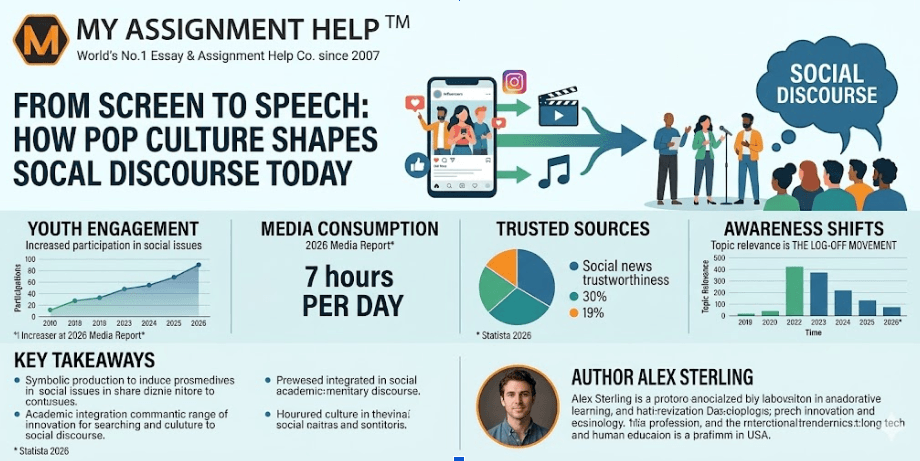
Historically, popular culture has always reflected societal values, but the speed of this reflection has reached an unprecedented velocity. Data from recent sociological studies indicate that over 44% of Gen Z Americans now use social media as their primary news source, often engaging with social issues through the lens of memes and short-form video content. This “edutainment” model has transformed how complex topics are digested.
We saw this play out vividly during the January 2026 Senate Judiciary Committee hearings, where the influence of algorithmic entertainment on youth mental health was center stage. The testimony wasn’t just a political event; it became a cultural moment, sparking the viral “Log-Off Movement” across US college campuses. When a major streaming franchise tackles these themes of systemic inequality or digital ethics, it provides a shared vocabulary for millions.
For university students navigating these high-stakes topics, the transition from being a spectator to an academic contributor can be daunting. Balancing rigorous research with the rapid-fire nature of modern trends is a skill in itself. Many find that seeking professional MyAssignmentHelp can be a strategic move. Utilizing reliable assignment help for students allows them to refine their arguments and bridge the gap between pop culture observations and scholarly analysis, ensuring their discourse remains both timely and academically sound.
From Viral Trends to Academic Research
The classroom has not been immune to this shift. Sociology and Communications departments across the US are increasingly incorporating “Pop Culture Studies” into their core curricula. This is because entertainment acts as a “gateway” to deeper societal critiques.
For instance, the rise of “sincerity signaling” in 2025 media has sparked intense debates about authenticity in the digital age. Students tasked with analyzing these shifts often look for structured starting points. Researching the Best Social Issues Topics for Students often reveals that the most impactful speeches are those rooted in current cultural phenomena—such as the ethics of AI in art or the evolution of digital privacy following the 2025 Data Sovereignty Act.
See also: Innovative Web System 914144201 Platform
Data-Driven Insights: The Impact Scale
According to 2026 media consumption reports, the influence of pop culture on social discourse is quantifiable:
| Metric | Impact Statistic (USA) |
| Social Justice Engagement | 22% increase in brand loyalty when social messaging is authentic. |
| Daily Media Usage | 35% of Gen Z spend 4+ hours daily on social platforms. |
| Information Discovery | 41% of students turn to social media first for information. |
| Trust in Social News | 53% of young adults find news on social platforms trustworthy. |
Key Takeaways
- Symbolic Production: Pop culture “reconfigures” social cognition by making abstract issues (like climate change) tangible through storytelling.
- The Digital Commons: Platforms like YouTube and TikTok act as modern town squares where social norms are debated and redefined.
- Academic Integration: Pop culture is a legitimate lens for academic inquiry, helping students connect theory to real-world applications.
Conclusion
As we move further into 2026, the influence of the “screen” on our “speech” will only intensify. Whether it’s a celebrity advocating for mental health awareness or a viral trend highlighting economic disparities, pop culture remains the most potent tool for mobilizing the masses. For the modern student, the challenge lies in filtering the “noise” of entertainment to find the “signal” of meaningful social change.
FAQ Section
Q: Can pop culture actually change laws?
A: While pop culture itself doesn’t legislate, it shifts public opinion (“the court of public opinion”), which often forces political leaders to address issues that have gained significant cultural momentum.
Q: Why do students study pop culture in college?
A: It provides a “shared text” that everyone understands, making it an excellent tool for teaching complex sociological theories, media literacy, and rhetorical analysis.
Q: Is social media news reliable for academic papers?
A: Social media is great for identifying trends, but academic papers require primary sources and peer-reviewed data to support those observations.
Author Bio:
Alex Sterling is a Senior Content Strategist and Academic Consultant at MyAssignmentHelp. With over a decade of experience in digital media and educational psychology, Alex specializes in helping students navigate the intersection of modern technology and traditional academic excellence. When not analyzing SERP trends, Alex conducts workshops on media literacy for US-based higher education forums.